On The Paula Atherton Show: A Conversation in Motion with Rob Zinn
In an era where contemporary jazz continues to evolve beyond traditional boundaries, a recent Keymark Television interview brought together two artists who understand both the discipline and the freedom of the genre. Paula Atherton sat down with trumpeter, flugelhornist, and vocalist Rob Zinn for a wide-ranging conversation that traced a lifetime in music from childhood discovery to international stages and original artistry.
Zinn’s story begins not with formal training, but with immersion. Raised in a household filled with big band recordings and classic vocalists, his early connection to music was instinctive rather than academic. Though initially drawn to drums, he was guided toward trumpet, a decision that shaped his trajectory. By his teenage years, he was already navigating jazz ensembles, learning improvisation by ear, and absorbing the demands of ensemble discipline.
What emerges clearly in the interview is the role of environment. Zinn credits formative experiences in school jazz programs and regional ensembles for shaping both his technical foundation and artistic confidence. Opportunities such as touring Europe as a teenager with a youth jazz band expanded his perspective early, reinforcing the idea that music could extend beyond hobby into vocation.
Atherton, herself an accomplished performer, steered the conversation toward the often understated mechanics of growth: mentorship, repetition, and humility. Zinn emphasized the impact of early teachers who demanded consistency and accountability, noting that musical development is built on sustained, often solitary effort. Technique, he explained, is non-negotiable scales, timing, and tone form the baseline upon which creativity can exist.
The discussion shifted to Zinn’s transition into recording and releasing original music, a step he took later in life after years of performing in various bands, including funk, blues, and corporate ensembles. His first album, released in 2016, reflected a broad spectrum of influences—R&B, Latin, jazz—without strict adherence to a single style. While he now views that debut as exploratory, it marked a critical turning point: the move from interpreter to creator.
Subsequent projects brought refinement and industry collaboration, including work with established producers and musicians. Zinn described this phase as both validating and instructive, offering insight into the professional expectations of recording, touring, and branding in contemporary jazz. His evolution underscores a central theme of the interview: artistic identity is iterative, not fixed.
Performance, however, remains the core of his practice. Zinn spoke at length about the challenge of connecting with audiences, particularly in instrumental music, where emotion must be conveyed without lyrics. The objective, he noted, is not technical display but resonance. Setlists are shaped as much by audience response as by artistic preference, blending original compositions with familiar material to create a shared experience.
Atherton and Zinn also explored broader issues affecting the music community, including the decline of arts education. Both expressed concern over diminishing access to school music programs, arguing that such environments provide not only artistic training but essential life skills, discipline, collaboration, and identity. Their exchange framed music as both personal expression and social infrastructure.
The interview concluded with a forward-looking perspective. Zinn discussed upcoming releases and performances, including new material that continues to push stylistic boundaries within contemporary jazz. He emphasized adaptability and persistence, acknowledging the unpredictability of the industry while remaining focused on the creative process.
For viewers, the conversation offered more than biography. It presented a working model of what it means to sustain a career in music: continuous learning, strategic risk-taking, and an unwavering commitment to craft. Through Atherton’s measured, informed questioning and Zinn’s candid reflections, the interview captured a portrait of artistry defined not by arrival, but by ongoing motion.
This story is a feature on Rob Zinn, it should be written with that angle. We are using the Paula Atherton interview as the basis for the story
Inside the Musical Journey of Rob Zinn
For Rob Zinn, music was never a sudden decision, it was a constant presence. In a recent Keymark Television interview with Paula Atherton, Zinn detailed a path shaped by early exposure, disciplined growth, and a gradual but deliberate move into original artistry.
Zinn’s introduction to music predates memory. Family photos show him at a toy piano as a toddler, but more influential was the soundscape of his home—big band recordings and classic vocalists playing regularly. Without coming from a family of professional musicians, he developed an ear early, absorbing melody and rhythm before formal instruction began.
That instruction started in childhood school band programs, where he was steered toward trumpet. From there, his progression was steady. By adolescence, he was performing in district and all-state ensembles, navigating both classical and jazz settings. His early exposure to improvisation came not through theory, but instinct, learning to solo by listening rather than analysis. That reliance on ear would remain a defining trait.
A key factor in Zinn’s development was access to strong music programs and mentorship. Private instruction reinforced discipline, while ensemble playing introduced the demands of precision, blending, and leadership. These environments, he explained, provided a practical education that extended beyond what formal coursework alone might offer.
By his late teens and early twenties, Zinn was already performing alongside more experienced musicians in big bands, gaining real-world experience in professional settings. These opportunities required rapid growth—matching the expectations of seasoned players while refining his own technique. The experience also deepened his understanding of musical dynamics, particularly the importance of listening within a group.
Despite this immersion, Zinn did not initially pursue music as a full-time academic path. Instead, his career developed alongside other professional work, with music remaining a constant parallel pursuit. Over time, that balance shifted as performance opportunities expanded across genres, including funk, blues, and corporate bands. These varied experiences broadened his musical vocabulary and later informed his compositional style.
The transition to recording original music came later than for many artists. In 2016, Zinn released his first album, a project that reflected his wide range of influences rather than a narrowly defined sound. While he now views that debut as exploratory, it marked a turning point—transforming years of accumulated ideas into tangible work.
Subsequent releases showed increased focus, aided by collaboration with established producers and musicians. These partnerships helped refine both his sound and his approach to the industry. Zinn described this phase as critical in understanding not just how to create music, but how to position it, learning the mechanics of production, distribution, and audience engagement.
At the center of his work remains performance. Zinn places primary emphasis on audience connection, particularly within instrumental music where emotional communication must be conveyed without lyrics. His approach is pragmatic: balance original material with recognizable elements, read the audience in real time, and prioritize engagement over technical display.
His live experience spans intimate venues to major festivals, including performances before large audiences that reinforced both the scale and immediacy of live music. These moments, he noted, are less about visibility and more about interaction, the ability to create a shared experience in real time.
Beyond his own career, Zinn expressed concern about broader trends in music education. Reflecting on his formative years, he pointed to the importance of accessible arts programs in developing not only musicianship but discipline and collaboration. Their decline, he suggested, represents a loss that extends beyond the arts themselves.
Looking ahead, Zinn continues to release new material and expand his performance schedule, maintaining a steady output shaped by both experience and experimentation. His recent work reflects a more defined artistic identity while still incorporating the stylistic range that has characterized his career.
About Rob Zinn
Rob Zinn is currently working on his fourth studio album, which already features several notable singles, including “Until I Met You,” “It Just Feels Right” featuring Nils, and “Weekend Games” featuring Michael Paulo. “Weekend Games” reached No. 22 on the Billboard Smooth Jazz Chart.
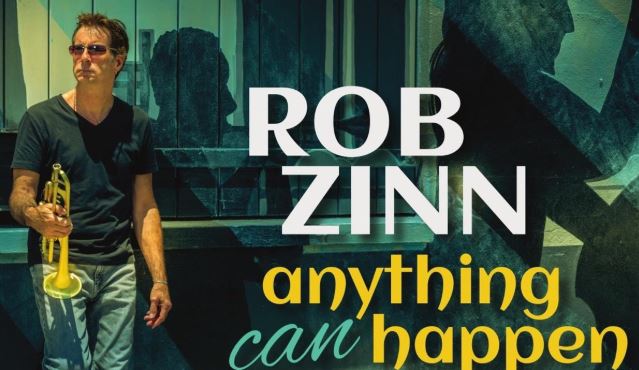
His previous album, Anything Can Happen, delivered multiple standout tracks such as “Take That,” “All In,” “When and Where” (feat. Jeff Ryan), and “Push It Forward” (feat. Ragan Whiteside), along with well-received covers of “Crazy” and “I Can’t Make You Love Me.”
Visit RobZinn.com
Keymark Television is a dynamic multimedia platform committed to highlighting the stories, artistry, and achievements of creators, entrepreneurs, and cultural innovators across the globe. Through exclusive interviews, original programming, and special features, Keymark Television delivers compelling content that informs, inspires, and connects audiences worldwide. The television and media network partners with both established and emerging voices, bridging entertainment and empowerment through storytelling that leaves a lasting mark.
Contact:
Communications Department
Keymark Television Network
communications@keymarktelevision.com
www.keymarktelevision.com